





2026-11-01, 05:51 PM
(This post was last modified: 2026-11-02, 08:40 AM by xkyball.
Edit Reason: Added refit planning and fabrication/installation guides.
)
Hello everyone,
I started modernising my boat, Number Five, with BBN Marine OS, AvNav and Signal K. Getting the data onto the network was only part of the job. Making charts, instruments, music and physical controls feel like one system on inexpensive displays became the much bigger project.
The result is an open Smart-Boat building kit. Signal K provides the existing marine-data foundation. Separate Pi services handle audio and sonar processing; our gateway provides shared state and command confirmation. HELM and MAP are native Android clients, with chart pixels rendered locally using ported OpenCPN/S52 foundations. This is our experience of a particular build, rather than a claim that existing marine interfaces cannot support touch.
One useful result is quite ordinary: move the main audio fader on one Lumina and the other shows the same confirmed Pi DSP value. Our latest recording checks that actual shared state, rather than just animating matching sliders. Another shows NOAA Boston charts being panned, zoomed and rotated on the physical display at original recording speed.
The display cost me €75. Getting it usable involved Android 10 behind an Android-14 version display, different firmware on apparently matching units, knob behaviour, startup and chart-memory limits. That price excludes the Pi, power supply, audio hardware, enclosure and labour.
Number Five: system overview, build history, current screenshots and native device videos
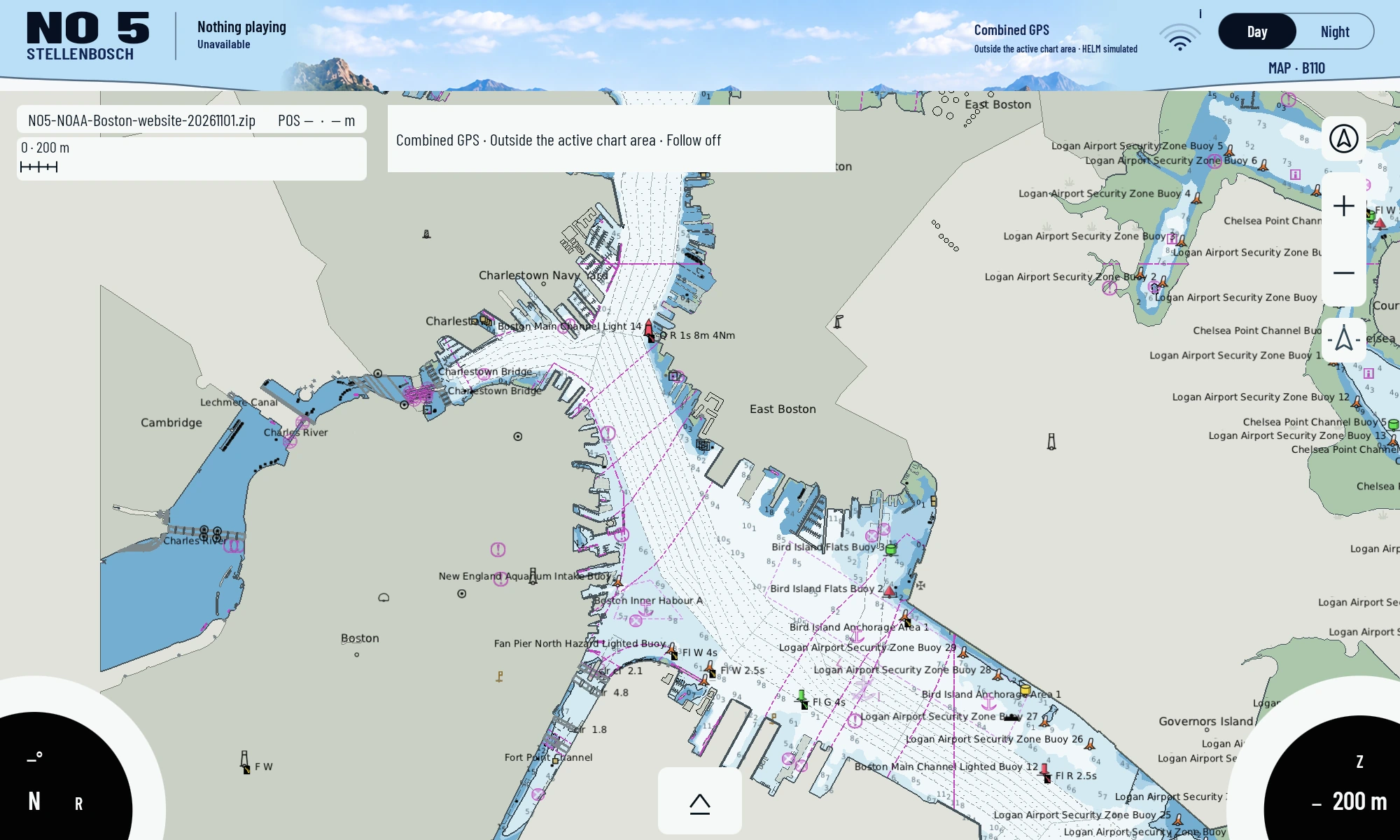
MAP 110 on the physical Lumina, 1 November 2026, using NOAA Boston data. Header telemetry is simulated or unavailable; this is a rendering demonstration.

HELM 206 audio controls on the physical Lumina, 1 November 2026. Real Pi sound settings; no music playback source connected during capture.
Further work connects shared route resources, extends the plotter-format components and adapts installation to each boat. Our sonar branch builds on one investigated Venterior unit.
My approach is to use a working version, learn from real data and installations, and share the next improvement. Separate services, device profiles and recovery recipes support that approach. Updates and remote maintenance are further ways to extend it.
The code was developed with substantial AI assistance; the existing projects and their licences remain credited. I would welcome practical feedback on the service boundaries and suggestions for displays, physical controls and reproducible installations.
How the components fit together · Public sources
What would you connect to this on your own boat?
The philosophy behind it
Planning a refit or a custom installation? Start with your boat and existing devices, or explore fabrication and installation from the open sources.
Christoph
I started modernising my boat, Number Five, with BBN Marine OS, AvNav and Signal K. Getting the data onto the network was only part of the job. Making charts, instruments, music and physical controls feel like one system on inexpensive displays became the much bigger project.
The result is an open Smart-Boat building kit. Signal K provides the existing marine-data foundation. Separate Pi services handle audio and sonar processing; our gateway provides shared state and command confirmation. HELM and MAP are native Android clients, with chart pixels rendered locally using ported OpenCPN/S52 foundations. This is our experience of a particular build, rather than a claim that existing marine interfaces cannot support touch.
One useful result is quite ordinary: move the main audio fader on one Lumina and the other shows the same confirmed Pi DSP value. Our latest recording checks that actual shared state, rather than just animating matching sliders. Another shows NOAA Boston charts being panned, zoomed and rotated on the physical display at original recording speed.
The display cost me €75. Getting it usable involved Android 10 behind an Android-14 version display, different firmware on apparently matching units, knob behaviour, startup and chart-memory limits. That price excludes the Pi, power supply, audio hardware, enclosure and labour.
Number Five: system overview, build history, current screenshots and native device videos
MAP 110 on the physical Lumina, 1 November 2026, using NOAA Boston data. Header telemetry is simulated or unavailable; this is a rendering demonstration.
HELM 206 audio controls on the physical Lumina, 1 November 2026. Real Pi sound settings; no music playback source connected during capture.
Further work connects shared route resources, extends the plotter-format components and adapts installation to each boat. Our sonar branch builds on one investigated Venterior unit.
My approach is to use a working version, learn from real data and installations, and share the next improvement. Separate services, device profiles and recovery recipes support that approach. Updates and remote maintenance are further ways to extend it.
The code was developed with substantial AI assistance; the existing projects and their licences remain credited. I would welcome practical feedback on the service boundaries and suggestions for displays, physical controls and reproducible installations.
How the components fit together · Public sources
What would you connect to this on your own boat?
The philosophy behind it
Planning a refit or a custom installation? Start with your boat and existing devices, or explore fabrication and installation from the open sources.
Christoph